

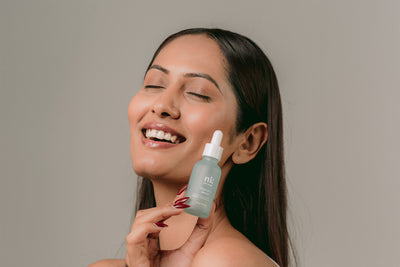
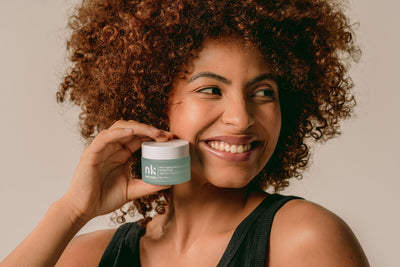
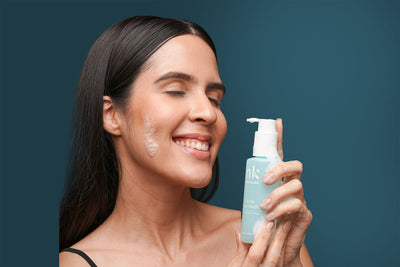
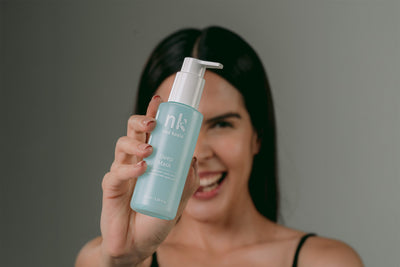

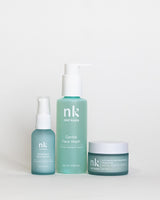
Kakadu plum (Terminalia ferdinandiana) is a small pale-green fruit native to the tropical woodlands of northern Australia. It has one of the highest recorded vitamin C concentrations of any fruit measured, commonly cited at up to around 100 times that of an orange by weight. It has been eaten and used by First Nations peoples across northern Australia for tens of thousands of years. We use it in our Anti-Aging Skin Brightening Moisturiser.
Where does Kakadu plum come from?
The tree grows across the Top End and the Kimberley (the Northern Territory and northern Western Australia), in open woodland and along floodplains. It is also called gubinge, billygoat plum, salty plum and murunga, depending on Country and language. The fruit is small, roughly the size of an olive, and ripens toward the end of the dry season.
It has been part of Aboriginal food and traditional practice for a very long time. The fruit was eaten fresh, and the bark and sap had their own traditional uses. That knowledge is not incidental background to the ingredient; it is the reason anyone outside northern Australia knows about the plant at all. Almost all commercially harvested Kakadu plum is still wild-harvested, much of it by Aboriginal-owned enterprises and community harvesters.
How much vitamin C does Kakadu plum contain?
Published analyses have measured ascorbic acid in Kakadu plum in the thousands of milligrams per 100 grams of fresh fruit. An orange sits at about 50 milligrams per 100 grams. That is where the "up to 100 times an orange" figure comes from.
The measured range is wide because it varies: by tree, by season, by rainfall, by how the fruit is handled after picking. Anyone quoting a single precise multiplier is rounding a real spread into a marketing number. What is not in dispute is that it is one of the richest natural sources of vitamin C known.
Kakadu plum also contains ellagic acid and gallic acid, both polyphenols with antioxidant activity, which is part of why the whole fruit extract behaves differently in a formula from isolated ascorbic acid.
Why is it in a moisturiser and not the vitamin C serum?
It is a fair question, and the answer is about chemistry rather than marketing.
Vitamin C is notoriously unstable. Pure L-ascorbic acid oxidises on contact with light, air and water. It is why a vitamin C serum turns orange in the bottle and stops working. Formulating around that problem usually means low pH, airless packaging, and a short shelf life.
Our Vitamin C Serum is built for exactly that job, with pure vitamin C (ascorbic acid) and ferulic acid in a lightweight water-based serum.
The Kakadu plum extract sits in the Anti-Aging Skin Brightening Moisturiser instead, where it works alongside lactic acid, sodium hyaluronate, urea, copper gluconate and magnesium aspartate. A moisturiser base is a more forgiving environment for a botanical extract than an acidic serum, and it means the antioxidant is sitting in the step you leave on your skin all day rather than the one you cover over immediately.
Both are real vitamin C. They are doing different jobs, in different steps, and we would rather explain that than let you assume the two products are interchangeable.
What does vitamin C do on skin?
Topical vitamin C is one of the most studied cosmetic actives there is. In the context of skincare it is used to:
- Provide antioxidant support against environmental stress
- Help improve the appearance of uneven tone and dark marks over time
- Contribute to skin looking brighter and more even
Those are cosmetic effects, and they build gradually with consistent use. Anyone promising you something dramatic and immediate from a vitamin C product is selling you something other than vitamin C. See all our brightening skincare.
A note on how we talk about this
Kakadu plum is having a moment in global skincare, and a lot of brands are using the words "Australian native" and "ancient wisdom" without much behind them. We would rather be plain about it: this is a remarkable fruit with a genuinely exceptional vitamin C content, it belongs to Country in northern Australia, and the knowledge of what it does came from the people who have lived alongside it for millennia. We name it on the label because it is in the formula, not because it sounds good.
Every ingredient in every NKD Koala product is named on the label. If you want to check what is in the moisturiser before you buy it, the full list is on the product page.
Sources
- Konczak I, Zabaras D, Dunstan M, Aguas P. Antioxidant capacity and hydrophilic phytochemicals in commercially grown native Australian fruits. Food Chemistry, 2010.
- AgriFutures Australia. Health Benefits of Australian Native Foods: An evaluation of health-enhancing compounds.
- US Department of Agriculture, FoodData Central: oranges, raw (vitamin C per 100 g).
This article is general information about a cosmetic ingredient, not medical advice. If you have a persistent skin concern, speak to a pharmacist, GP or dermatologist.