
Hyaluronic acid is a humectant: a molecule that attracts water and holds onto it. In skincare it draws moisture toward the upper layers of the skin and keeps it there, which makes skin look plumper and feel less tight. It does not add water by itself. That distinction is the difference between hyaluronic acid working for you and hyaluronic acid doing nothing at all.
What is hyaluronic acid?
Hyaluronic acid occurs naturally in your body: in skin, in joint fluid, in the eyes. Roughly half of the body's supply sits in the skin, where it helps hold the structure hydrated. The amount you have declines with age, which is part of why older skin looks and feels drier.
A single hyaluronic acid molecule can bind many times its own weight in water. The figure repeated online is "up to 1,000 times its weight", and it comes from laboratory measurements rather than from what happens on a face. It is a useful shorthand for the mechanism, not a promise about a result.
On an ingredients list you will usually see Sodium Hyaluronate rather than hyaluronic acid itself. Sodium hyaluronate is the salt form. It is more stable in a formula, has a smaller molecular size, and sits better in a water-based serum. Functionally it does the same job. Our Hyaluronic Acid Serum uses sodium hyaluronate for exactly these reasons.
What is the most common hyaluronic acid mistake?
Here is the part most product pages leave out.
A humectant pulls water from wherever water is available. Applied to damp skin, it grabs the moisture sitting on the surface and holds it. Applied to bone-dry skin in dry air (a heated room in a Melbourne winter, an air-conditioned office, a long flight), it has nowhere to pull from except the deeper layers of your own skin. It can then draw that water upward, where it evaporates.
The result is that hyaluronic acid, used carelessly, can leave skin feeling tighter than before. People conclude the product does not work for them. Usually the product is working exactly as designed; it is just being asked to do the impossible.
Two things help:
- Apply to damp skin. Straight after cleansing, while your face is still slightly wet. Damp, not dripping.
- Seal it. Follow with a moisturiser or an oil. The humectant holds the water; the layer on top slows it evaporating.
This is why we put jojoba in the serum rather than leaving it as water and sodium hyaluronate alone. Jojoba (Simmondsia chinensis) is technically a liquid wax rather than an oil, and it gives the formula a small amount of that sealing effect on its own. It does not replace a moisturiser. It does mean the serum is less likely to work against you if you are in a hurry.
What can hyaluronic acid do, and what can't it?
Hyaluronic acid is good at:
- Making skin look plumper and feel more comfortable
- Softening the appearance of fine lines caused by dehydration rather than structural aging
- Sitting alongside almost anything else without conflict. It is one of the least reactive actives available
Hyaluronic acid will not:
- Repair a damaged skin barrier on its own. That needs lipids, not just water
- Treat oiliness, though dehydrated skin sometimes overproduces oil, so hydrating properly can help indirectly
- Do anything permanent. It is a daily-use hydrator, not a treatment. Stop using it and skin returns to where it was.
Is dry skin the same as dehydrated skin?
No, and the difference determines whether hyaluronic acid is the right product for you at all.
Dry skin lacks oil. It is a skin type. It tends to feel rough, look flaky, and stay that way year-round. It wants lipids: richer moisturisers, oils, occlusives.
Dehydrated skin lacks water. It is a temporary condition, and anyone can have it, including oily skin. It feels tight, looks dull, and fine lines show up more than usual. It wants humectants, which is where hyaluronic acid earns its place.
Plenty of people have both, which is why "hydrating serum plus moisturiser" is such a common pairing. If your skin feels tight but is not flaky, start with the water. If it is flaky, you need the oil as well. See our full range of hydrating skincare.
How does NKD Koala use hyaluronic acid?
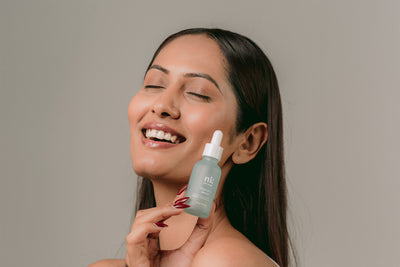
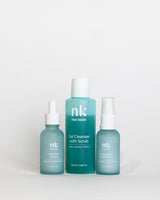
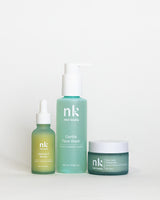
Our Hyaluronic Acid Serum is a short formula: sodium hyaluronate for the hydration, jojoba for a light seal, tocopherol (vitamin E) as an antioxidant. 30ml. Made in Melbourne.
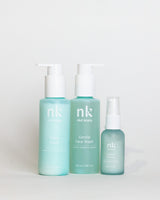
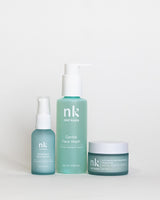
It appears in several of our Rituals as the hydration step, usually straight after cleansing and before a moisturiser. In the Acne & Clarity Ritual it plays a specific role: blemish-focused actives tend to be drying, and skipping hydration is how people end up with skin that is both irritated and still breaking out.
Every ingredient in it is named on the label, as with everything we make. The full list is on the product page.
Sources
- Papakonstantinou E, Roth M, Karakiulakis G. Hyaluronic acid: a key molecule in skin aging. Dermato-Endocrinology, 2012;4(3):253-258. Read it on PubMed Central.
This article is general information about a cosmetic ingredient, not medical advice. If you have a persistent skin concern, speak to a pharmacist, GP or dermatologist.